
Modern european cuisine
Mateusz Choróbski: P.OST
Wed, 10 Dec 2025 18:00
Wed, 10 Dec 2025 18:00
On view
11 Dec 2025-31 Jan 2026
Mateusz Choróbski: P.OST
|
The Kunstverein am Rosa-Luxemburg-Platz is pleased to present P.OST, the first institutional solo exhibition in Germany by Polish artist Mateusz Choróbski. Developed specifically for the Kunstverein, the exhibition brings together sound, video, light, and sculptural installations that reflect on memory, transformation, and the layered identity of Rosa-Luxemburg-Platz. The title P.OST refers both to the vanished OST sign on the Volksbühne and to the question of what comes “after the East.” Drawing inspiration from the architectural and cultural history of Rosa-Luxemburg-Platz, particularly Hans Poelzig’s designs for the Babylon cinema, he transforms the gallery into a stage built from traces, shadows, and fragments of the surrounding urban fabric. His broader practice spans video, installation, performance, sound, and sculpture. Choróbski frequently juxtaposes the human body with architecture, exploring what remains when social, political, or material systems reach exhaustion—ruined modernist buildings, the weight of debt, or the fragile body at rest. These remnants become points of departure for thinking about vulnerability, resilience, and shifting cultural narratives. Working with found glass objects fused into new forms, he turns light into a vessel of history and remembrance, using a technology he developed that captures and reproduces light from other parts of the world in real time. Entering the building, visitors encounter a door handle cast from melted Polish one-grosz coins, modeled after Poelzig’s historic designs. A sound installation—a looped inhalation—fills the entrance corridor, transforming the threshold into a zone of heightened awareness that blends physical contact with a subtle suggestion of breath and anticipation. Inside the first gallery, a 10-meter line of melted reinforced-glass panels, illuminated by hidden LEDs, reintroduces the exact light recorded on Rosa-Luxemburg-Platz the previous day. The irregular, organic surfaces hold traces of time and atmosphere, echoing the shifting conditions outside and inviting reflection on memory, presence, and the passage of time. In the window room, a video projection shows a conductor’s hand performing music from the 1920 silent film Golem: How He Came into the World—for which Poelzig created the set design. Projected toward the street, the gesture responds to the rhythms and emotional atmospheres surrounding the square, underscoring its continual state of tension, performance, and collective presence. A second room presents a large-format installation of glass panels fused with remnants of the artist’s earlier works. Slightly elevated above the floor and visible from the street, the piece becomes a kind of shadow theatre: silhouettes of visitors animate the surface, making the audience an integral part of the work and extending the exhibition’s dramaturgy into public space.
|
|||||||||||||||||||||
|
|
|||||||||||||||||||||
|
|
|||||||||||||||||||||
|
|||||||||||||||||||||
|
|
|||||||||||||||||||||
|
|
|||||||||||||||||||||
|
|||||||||||||||||||||
|
|
|||||||||||||||||||||
|
|||||||||||||||||||||
|
|
|||||||||||||||||||||
|
|||||||||||||||||||||
|
|
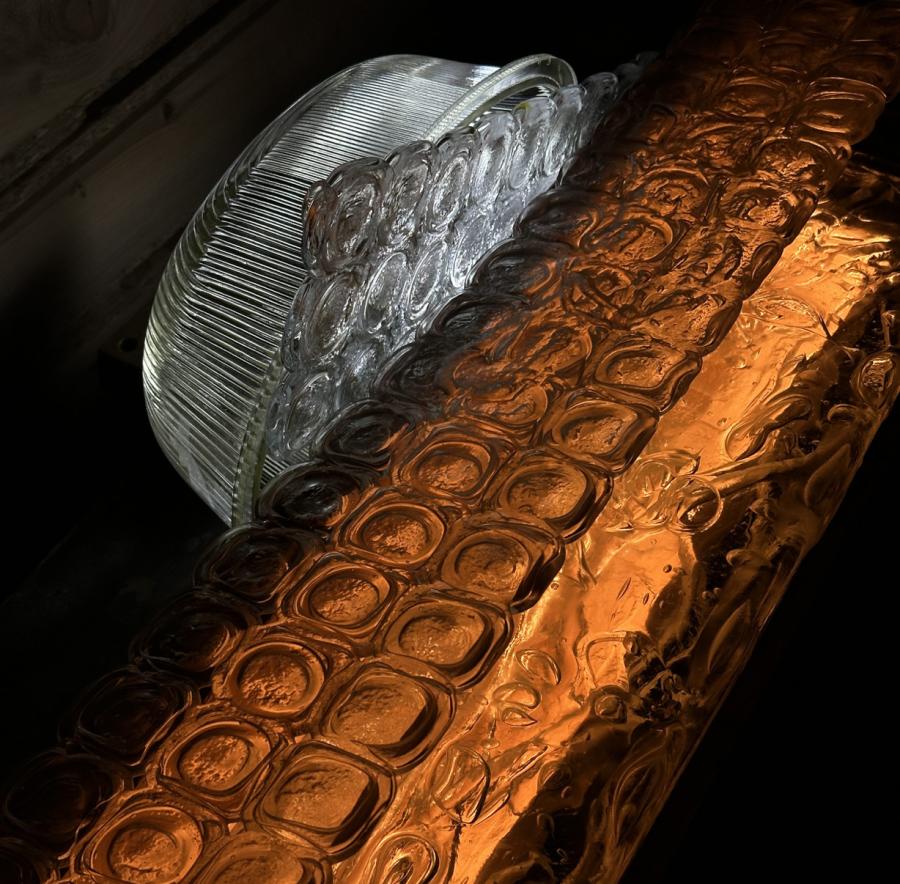
Detail from work in progress: Mateusz Choróbski, That Passed the Time, 2025